
Buying traffic is easy.
Converting that traffic into paying customers is where most campaigns fail.
Many advertisers assume that success in native advertising depends on writing better headlines or designing more attractive images. While creatives certainly matter, they represent only the first step of a much larger system. A native campaign is only as strong as the funnel behind it.
The highest-performing native campaigns are not built around a single advertisement—they are built around a carefully planned user journey. Every stage has a purpose: attract attention, build curiosity, establish trust, answer objections, and finally guide the visitor toward a conversion.
This is why experienced media buyers think in terms of funnels rather than ads.
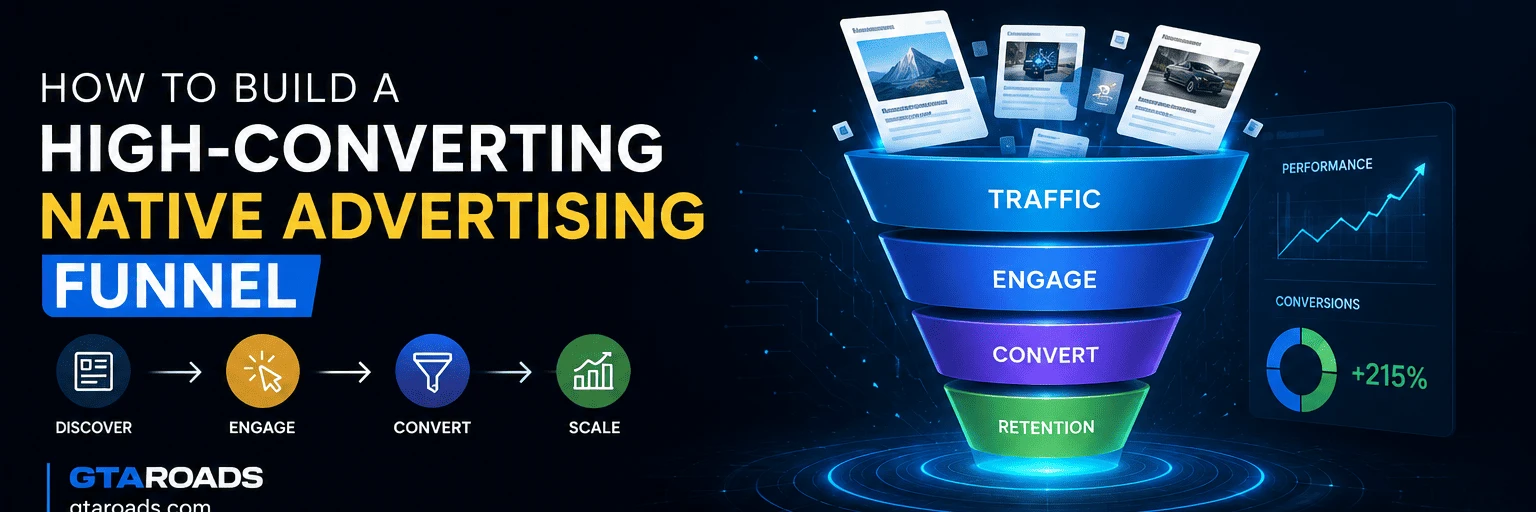
Platforms like GTARO Ads, which provide access to native advertising alongside other performance-focused traffic formats, allow advertisers to test and optimize every stage of that journey instead of focusing only on click-through rates.
Here’s what a high-converting native advertising funnel actually looks like.
Step 1: Understand Why People Click Native Ads
Native advertising works because it doesn't interrupt the browsing experience.
People rarely wake up wanting to buy a new VPN, subscribe to financial software, or install another application. They browse articles, read reviews, compare products, and search for solutions to problems.
A successful native ad enters that process naturally.
Instead of saying:
Buy our product today.
It says:
Here's something interesting that might solve your problem.
That difference changes user psychology completely.
Native advertising begins with curiosity—not with selling.
Step 2: Stop Selling Too Early
One of the biggest mistakes advertisers make is sending native traffic directly to a sales page.
Native visitors usually aren't ready to buy immediately.
They clicked because they wanted information.
If the first thing they see is a large "Buy Now" button, many leave within seconds.
Instead, successful funnels educate before they persuade.
Good first-touch content might include:
- industry comparisons;
- practical guides;
- customer stories;
- product reviews;
- expert recommendations;
- problem-solving articles.
The goal isn't to hide the commercial offer.
The goal is to make the offer feel like the logical conclusion.
Step 3: Headlines Should Create Curiosity, Not Clickbait
A native campaign begins with the headline.
Many advertisers confuse curiosity with exaggeration.
Poor example:
This Secret Tool Will Change Your Life Forever!
Better example:
Why More Small Businesses Are Replacing Traditional Analytics Tools
The second headline promises information instead of making unbelievable claims.
Native advertising performs best when expectations match the destination page.
Visitors who feel misled rarely convert.
Step 4: The Landing Page Must Continue the Story
A common reason native campaigns lose money is message inconsistency.
Imagine this sequence:
Headline:
"5 Mistakes Businesses Make When Choosing CRM Software."
Landing page:
"BUY OUR CRM TODAY!"
The transition feels unnatural.
Instead, the landing page should continue the conversation started by the advertisement.
If the ad promises advice, the page should deliver advice.
If the ad promises comparisons, the page should provide comparisons.
The offer should appear naturally after the visitor understands the context.
Step 5: Focus on One Problem
Many landing pages try to explain every product feature.
Visitors rarely care.
People buy solutions.
A better approach is to identify one clear problem.
For example:
Problem:
Small businesses waste hours manually organizing customer data.
Solution:
Automation reduces repetitive work and improves response times.
Offer:
Here's software designed specifically for that challenge.
Simple stories convert better than complicated product presentations.
Step 6: Build Trust Before Asking for Action
Native traffic generally converts well because users willingly clicked the advertisement.
That trust can disappear quickly if the landing page feels overly promotional.
Trust builders include:
- customer testimonials;
- independent reviews;
- statistics;
- screenshots;
- transparent pricing;
- recognizable partners;
- security certifications.
The goal isn't to overwhelm visitors with proof.
It's to reduce uncertainty.
People convert when they believe the solution is credible.
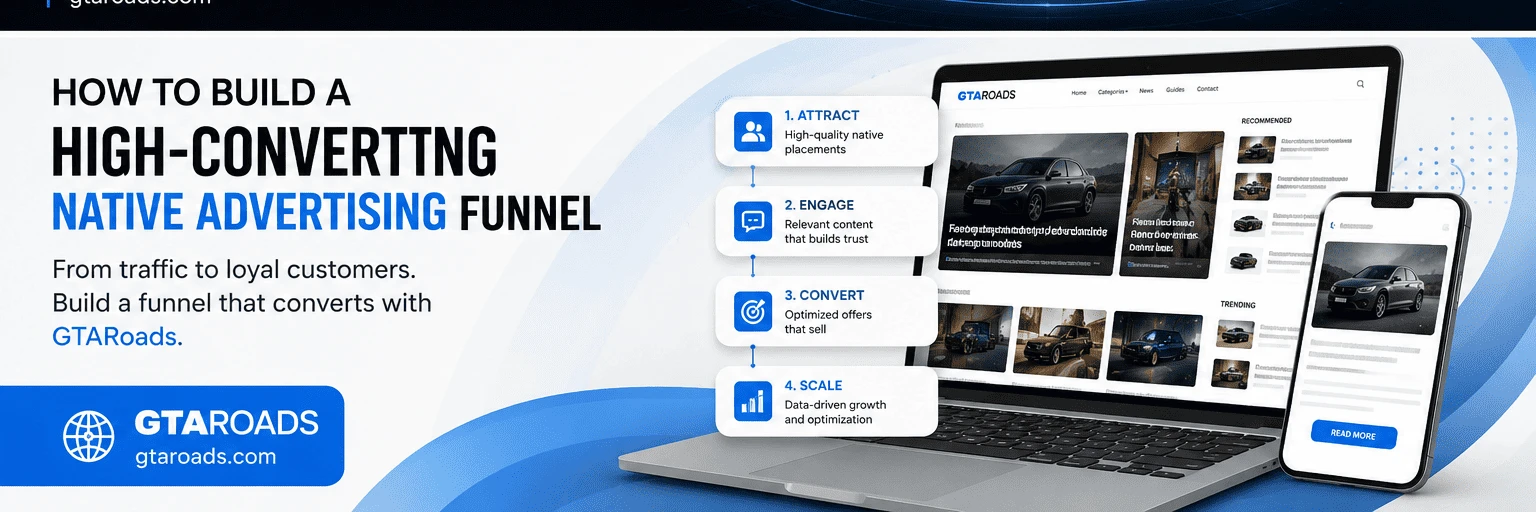
Step 7: Remove Friction
Every unnecessary step reduces conversions.
Common sources of friction include:
- slow page speed;
- complicated forms;
- confusing navigation;
- too many buttons;
- excessive text;
- multiple competing offers.
Ask one question:
"What prevents someone from taking the next step?"
Then remove it.
The best-performing native funnels often feel surprisingly simple.
Step 8: Mobile Comes First
More native traffic now arrives from smartphones than desktop devices.
Many campaigns still design pages for large monitors first.
That's backwards.
Check:
- loading speed;
- font size;
- button placement;
- image scaling;
- form usability.
Visitors should never need to zoom, rotate the screen, or search for the primary action.
A mobile-first experience usually improves desktop performance as well.
Step 9: Optimize the Pre-Landing Page
Many successful native campaigns don't send traffic directly to the main landing page.
Instead, they introduce an intermediate step.
The pre-lander warms up the audience.
Popular formats include:
- comparison articles;
- quiz funnels;
- product rankings;
- editorial reviews;
- case studies;
- educational content.
Its job isn't to sell.
Its job is to prepare the visitor for the offer.
A strong pre-lander filters low-quality traffic while increasing the intent of users who continue.
Step 10: Measure the Entire Funnel
Many advertisers celebrate high CTR.
CTR alone doesn't pay invoices.
Instead, monitor every stage:
Advertisement →
Landing Page →
Scroll Depth →
Button Click →
Lead →
Sale
A funnel may generate excellent click-through rates while losing money because visitors abandon the landing page.
Likewise, a campaign with average CTR can become highly profitable if downstream conversion rates are exceptional.
Performance marketing is about optimizing the entire journey—not just the first interaction.
Testing Never Stops
The best native advertisers rarely assume they have found the perfect campaign.
Instead, they constantly test.
Examples include:
Headlines:
- Question vs statement
- Numbers vs benefits
- Emotional vs practical
Images:
- Product photos
- Lifestyle imagery
- Illustrations
- People vs objects
Landing Pages:
- Long-form copy
- Short-form copy
- Video introductions
- Comparison tables
Calls to Action:
- Learn More
- Start Free
- Get Started
- See Pricing
Small improvements across multiple stages often produce much larger gains than redesigning an entire campaign.
Where GTARO Ads Fits Into the Process
Building a profitable funnel requires more than good creative work.
It also requires reliable traffic sources.
GTARO Ads provides advertisers with access to performance-focused traffic formats, including native advertising, making it easier to test funnels under real campaign conditions.
Instead of relying on a single acquisition method, advertisers can evaluate how different audiences respond to the same funnel and optimize campaigns using measurable performance data.
This flexibility is particularly valuable for affiliate marketers and media buyers who continuously refine offers, landing pages, and targeting strategies.
Common Native Funnel Mistakes
Even experienced advertisers sometimes make avoidable errors.
Some of the most common include:
Trying to sell immediately
Visitors clicked because they wanted information—not necessarily because they were ready to purchase.
Weak transitions
The advertisement, landing page, and offer should feel like one continuous conversation.
Ignoring page speed
A slow landing page wastes even the best traffic.
No audience segmentation
Different countries, devices, and audience groups often require different messaging.
Testing too many variables at once
Change one element at a time to identify what actually improves performance.
The Funnel Is More Important Than the Ad
Many advertisers spend days improving a headline while ignoring everything that happens afterward.
In reality, the advertisement is only the entrance.
Most conversions are won—or lost—inside the funnel itself.
A mediocre advertisement connected to an exceptional funnel will often outperform an excellent advertisement leading to a poor landing page.
That's why experienced media buyers spend as much time optimizing user flow as they do creating ads.
Final Thoughts
Native advertising continues to deliver strong results because it respects how people consume information online.
Visitors aren't interrupted.
They're invited into a conversation.
A successful native advertising funnel reflects that same philosophy from beginning to end.
It starts with curiosity, builds credibility, removes friction, and presents the offer only after the visitor understands its value.
Platforms like GTARO Ads provide the traffic needed to test and scale these funnels, but the real competitive advantage comes from understanding user behavior and designing every step with intention.
In native advertising, higher conversions rarely come from louder marketing messages. They come from creating a smoother journey between curiosity and action.
Also read on the topic: 11 native advertising examples to learn from.